
The Rise and Fall of Three Arrows Capital
April 4, 2026
The Evolution of 60 Minutes’ Cryptocurrency Coverage
April 5, 2026
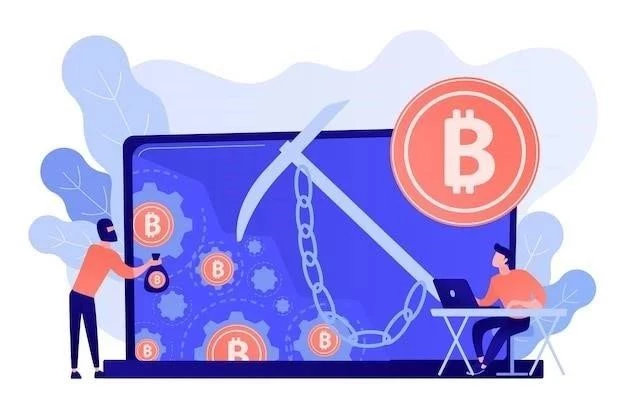
Crypto mining serves as the backbone for many decentralized digital currencies. It’s not merely about “creating” new coins, but a crucial process that secures blockchain networks, validates transactions, and systematically introduces new units of cryptocurrency into circulation. This article demystifies crypto mining, exploring mechanics, types, profitability factors, and its evolving landscape.
What is Crypto Mining?
At its core, crypto mining verifies, groups, and adds new cryptocurrency transactions to the blockchain digital ledger. This process also serves as the primary mechanism through which new units of a cryptocurrency are typically released into the market, often referred to as a “block reward.” Miners leverage specialized and powerful computing hardware to solve complex computational problems, competing globally to be the first to successfully validate a block of transactions.
The Blockchain and Consensus Mechanisms
The blockchain itself is a distributed, immutable, and continuously growing ledger that records all transactions across a vast network of computers. To maintain the integrity, security, and trustworthiness of this ledger, preventing issues like double-spending or fraudulent entries, a robust consensus mechanism is absolutely required. For many prominent cryptocurrencies, most notably Bitcoin, this critical mechanism is known as Proof-of-Work (PoW).
Proof-of-Work (PoW) Explained
Proof-of-Work (PoW) is a cryptographic system designed to deter cyberattacks and ensure network security by requiring participants to expend a significant amount of computational effort. In the context of cryptocurrency, miners perform this “work” by attempting to find a specific, difficult-to-predict hash value for a block of transaction data. The first miner to discover this hash proves computational effort, earning the right to add the validated block to the blockchain and receive rewards.
How Crypto Mining Works
The mining process involves steps designed to secure the blockchain network and efficiently process transactions.
Solving Complex Mathematical Puzzles
Miners compete to solve a unique cryptographic hash puzzle. This isn’t a traditional mathematical problem but rather a computationally intensive guessing game. Miners repeatedly generate and test various “nonces” (numbers only used once) and apply a cryptographic hashing function to a candidate block of transaction data. Their goal is to produce a resulting hash meeting a specific target requirement (e.g., starting with many zeros). This process is random and requires immense computational power.
Verifying and Adding Transactions
Once a miner successfully discovers a valid hash that satisfies the network’s difficulty target, they immediately broadcast this newly mined block, along with their proof of work, to the entire peer-to-peer network. Other nodes on the network then independently verify the legitimacy of the block’s transactions and the validity of the miner’s Proof-of-Work. If verifications pass, the new block is appended to the blockchain, permanently recording all verified transactions since the last block.
The Mining Reward
The miner adding a block is rewarded for efforts and contribution to network security. This reward consists of newly minted cryptocurrency (the “block reward”) and aggregate transaction fees from all transactions in that block. The block reward serves as the primary incentive, encouraging miners to dedicate their valuable computational resources to secure and maintain the decentralized network.
Types of Crypto Mining
Various methods and technological approaches have emerged for crypto mining, each with differing efficiency, initial investment, and cryptocurrency suitability.
- CPU Mining: Early Bitcoin mining was feasible using standard Central Processing Units (CPUs). However, as network mining difficulty increased, CPU mining became economically unviable due to low processing power compared to specialized hardware.
- GPU Mining: Graphics Processing Units (GPUs), designed for rendering graphics, proved far more efficient than CPUs due to parallel processing. GPU “mining rigs,” with multiple GPUs, remain viable for many altcoins.
- ASIC Mining: Application-Specific Integrated Circuits (ASICs) are hardware custom-built for mining a specific cryptocurrency algorithm. ASICs offer higher hash rates and superior energy efficiency than GPUs. However, they are expensive, consume substantial power, and are quickly rendered obsolete by newer models. ASICs now overwhelmingly dominate Bitcoin mining.
- Cloud Mining: Cloud mining lets individuals “rent” hashing power from large data centers. Users pay a fee and receive a proportional share of the mining rewards without needing to purchase, configure, or maintain their own physical hardware. While convenient, cloud mining often carries higher risks and lower returns than owning hardware, due to fees and potential scams.
- Mining Pools: A mining pool is a collaborative group of miners combining computational resources (hash power) to increase chances of solving a block and earning rewards. When the pool mines a block, the reward is distributed proportionally among participants based on contributed work. This reduces payout variance, providing more consistent, smaller payouts.
Key Factors for Profitable Mining
Profitability in crypto mining is a delicate balancing act, influenced by several dynamic, fluctuating variables.
- Hardware Costs: Initial investment in mining hardware (ASICs, GPUs, power supplies, cooling systems) can be substantial. Cost-effectiveness hinges on hardware’s efficiency, longevity, and resale value;
- Electricity Costs: Mining consumes vast electricity, making power costs the primary operational expense. Regions with cheap electricity have a distinct competitive advantage. High electricity prices can quickly render a mining operation unprofitable.
- Cryptocurrency Price Volatility: The market price of the cryptocurrency mined directly impacts profitability. A sudden drop in price can erase profits, while a surge can make less efficient operations viable.
- Network Difficulty: Network difficulty quantifies how challenging it is to find a hash value below a target. It adjusts periodically (e.g., every two weeks for Bitcoin) to ensure blocks are mined at a consistent rate, irrespective of total hash power. As more miners join, difficulty increases, requiring more computational power for the same reward.
Environmental and Ethical Considerations
The growth of crypto mining, particularly PoW systems, raises significant environmental and ethical concerns.
- Energy Consumption Debate: The energy consumed by PoW mining (e.g., Bitcoin) is a major point of contention. Critics argue it contributes to carbon emissions and strains power grids. Proponents counter that much energy comes from renewables or wasted sources, and traditional finance also has a large energy footprint.
- E-waste Concerns: The pursuit of more powerful, efficient mining hardware (especially ASICs) leads to an accelerated obsolescence cycle. This generates substantial electronic waste (e-waste) as old equipment is discarded, posing environmental challenges.
The Future of Crypto Mining
The crypto mining landscape is constantly evolving due to technological advancements, economic incentives, and environmental pressures.
- Transition to Proof-of-Stake (PoS): Many newer cryptocurrencies and established ones (like Ethereum’s transition to PoS) are moving away from energy-intensive PoW models. PoS does not require energy-intensive mining; instead, validators “stake” cryptocurrency as collateral to verify transactions, dramatically reducing energy consumption.
- Innovations in Efficiency: For PoW cryptocurrencies, R&D focuses on more energy-efficient hardware and data center optimizations. This includes utilizing waste heat from mining for practical purposes, like heating buildings.
Crypto mining is a complex, technologically driven, and economically significant process vital for blockchain security, decentralization, and operational integrity. While offering profit, it demands substantial initial investment, careful management of operational costs, and understanding of volatile market dynamics. As the digital asset space matures, methods, environmental impact, and role of crypto mining will adapt, balancing innovation with sustainability concerns.